Interview: Frank WANG Yefeng & Dave Kyu
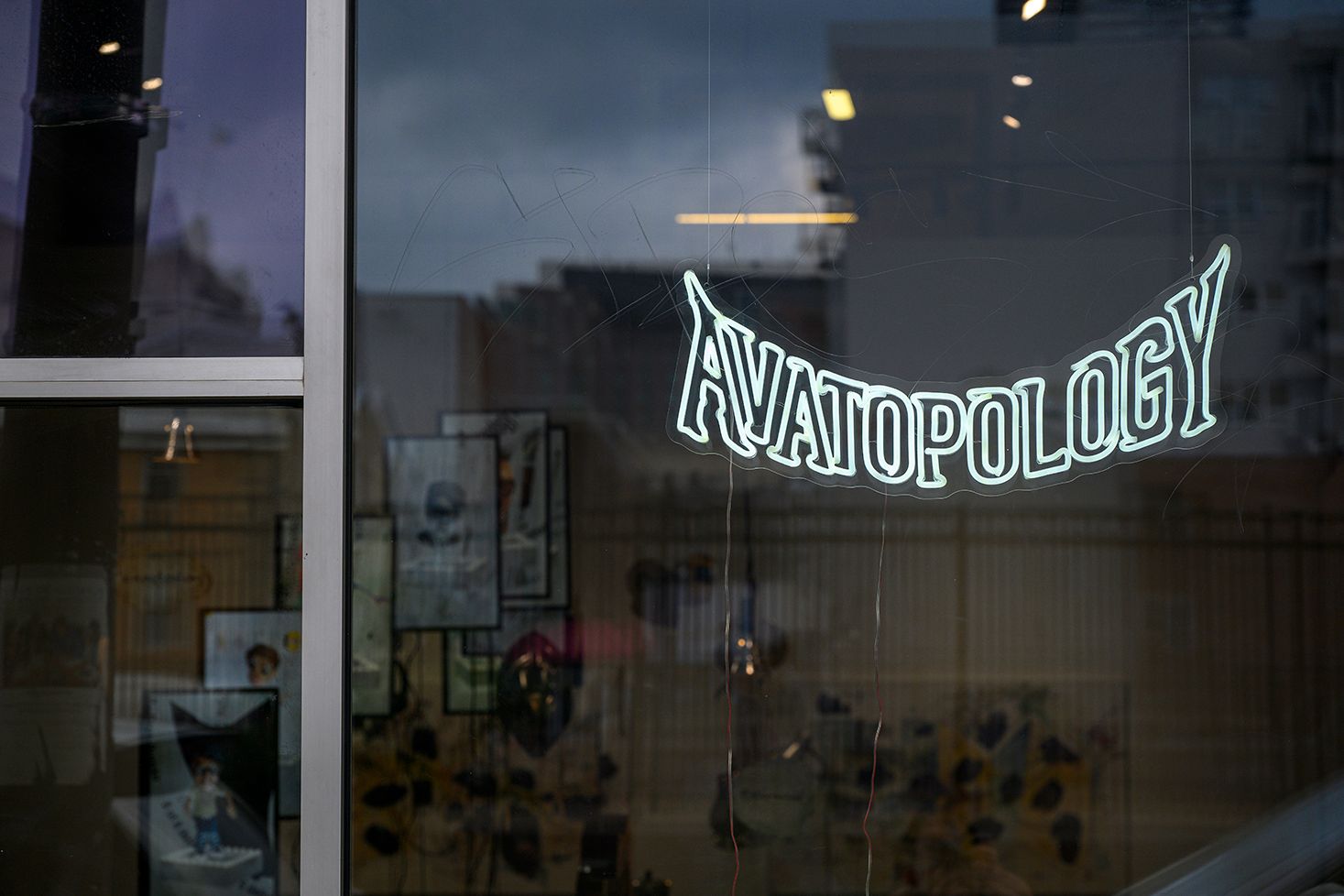
Currently on view at Asian Arts Initiative (AAI) is Avatopology 2.0: 9% Grin, 33% Groove, a solo exhibition by Frank WANG Yefeng. Curator Joyce Chung writes about the work:
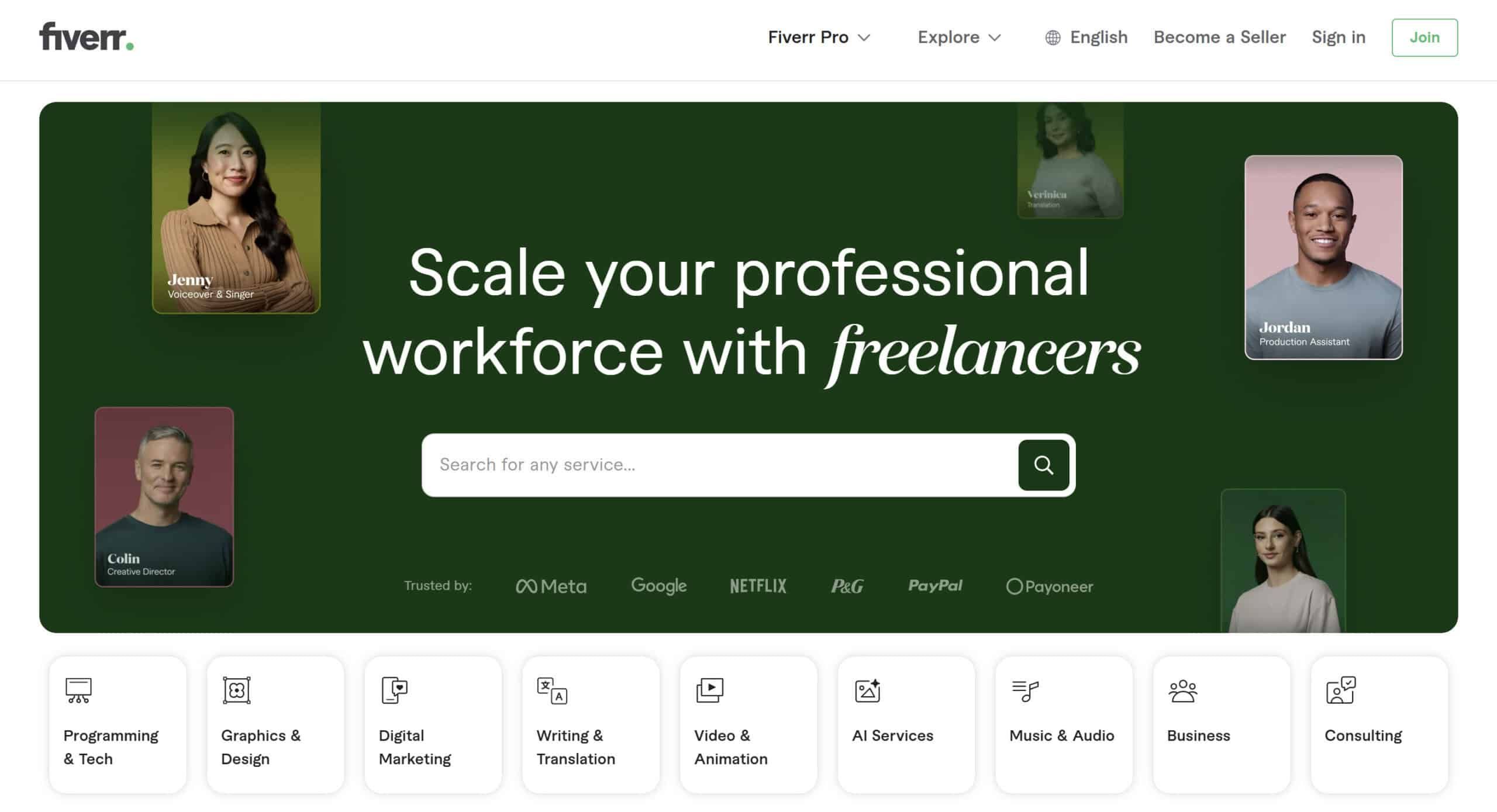
“Avatopology 2.0 examines how digital nomadic labor circulates, transforms, and becomes obscured through decentralized networks of multi-authored image production. Working with digital freelancers on Fiverr, an online marketplace where users commission creative services, Yefeng develops avatars of himself through a process of digital exchange. In the exhibition title, “9%” refers to the 9 animations assembled from digital assets created through this network, while “33%” represents the 33 digital creators who contributed to the project without ever meeting one another. The remaining “58%” points to the invisible labor, resources, and relationships that make a collective project possible but may remain unseen by the audience.”
The exhibition resists easy interpretation, and invites a provocative set of questions about power and agency in our increasingly complicated relationships with technology. Yet it doesn’t feel like a show about technology, but a show about people & collaboration. The show deserves your attention, so I sat down with Frank to learn more about his practice.
~
Dave Kyu: What’s your background as an artist? Have you always worked with tech and media?
Frank WANG Yefeng: I came from a sculptural background in my BFA in Shanghai, and then my MFA in technology at the School of the Art Institute of Chicago. So I have all these multiple backgrounds in media, as a way to work with movement.
Dave: In your own words, could you tell us about your exhibition at Asian Arts Initiative. There’s so much going on ~ can you describe what a visitor will see?
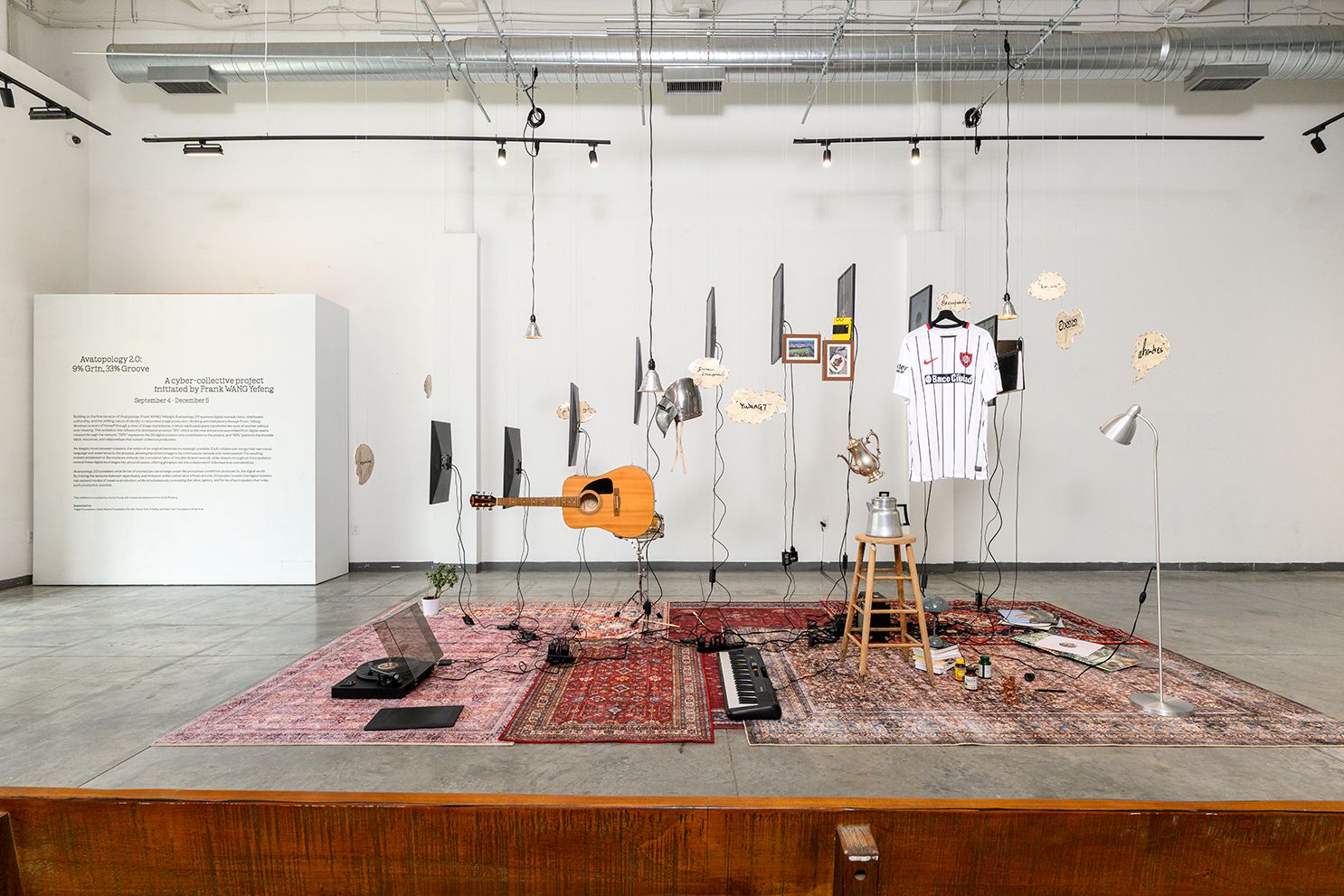
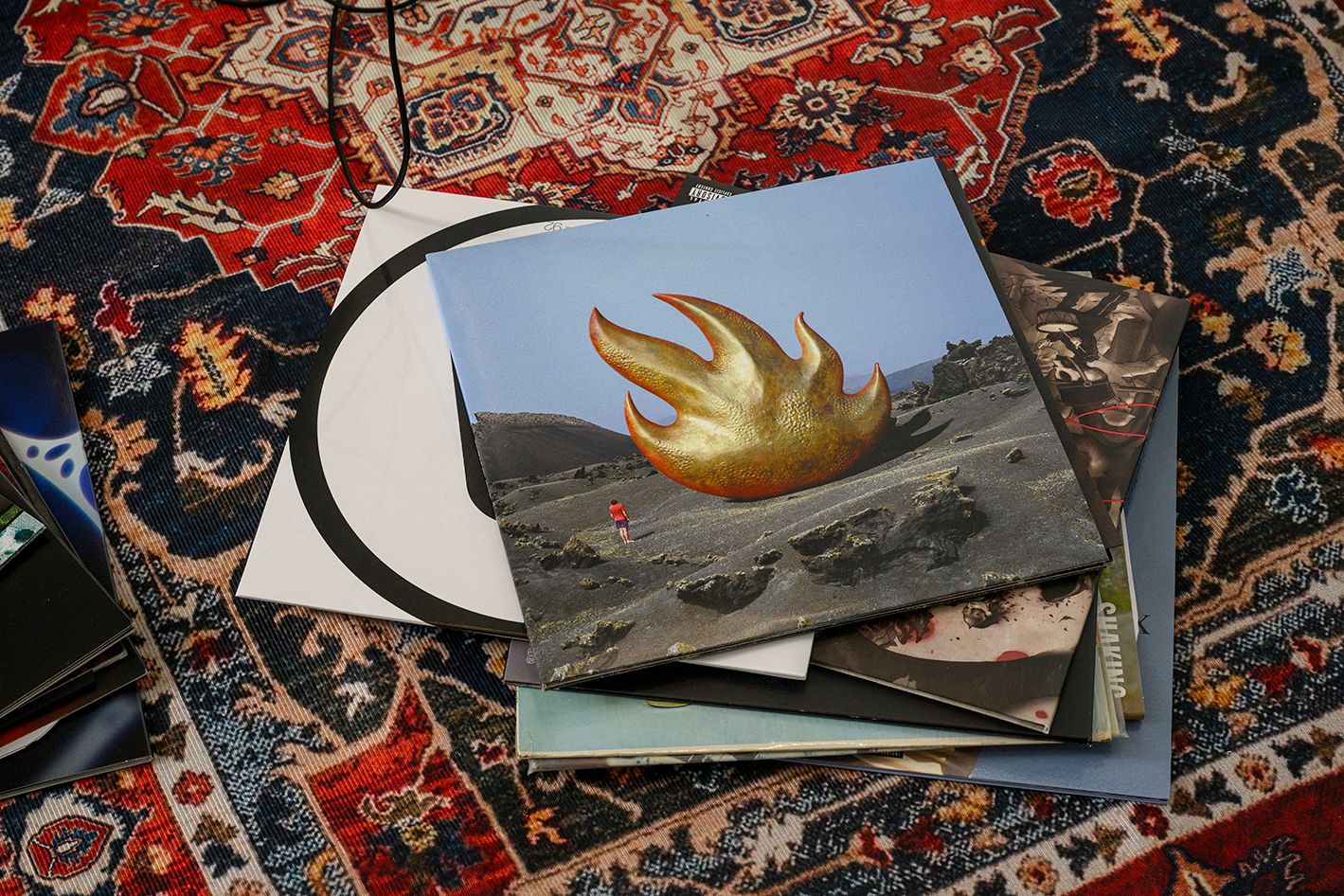
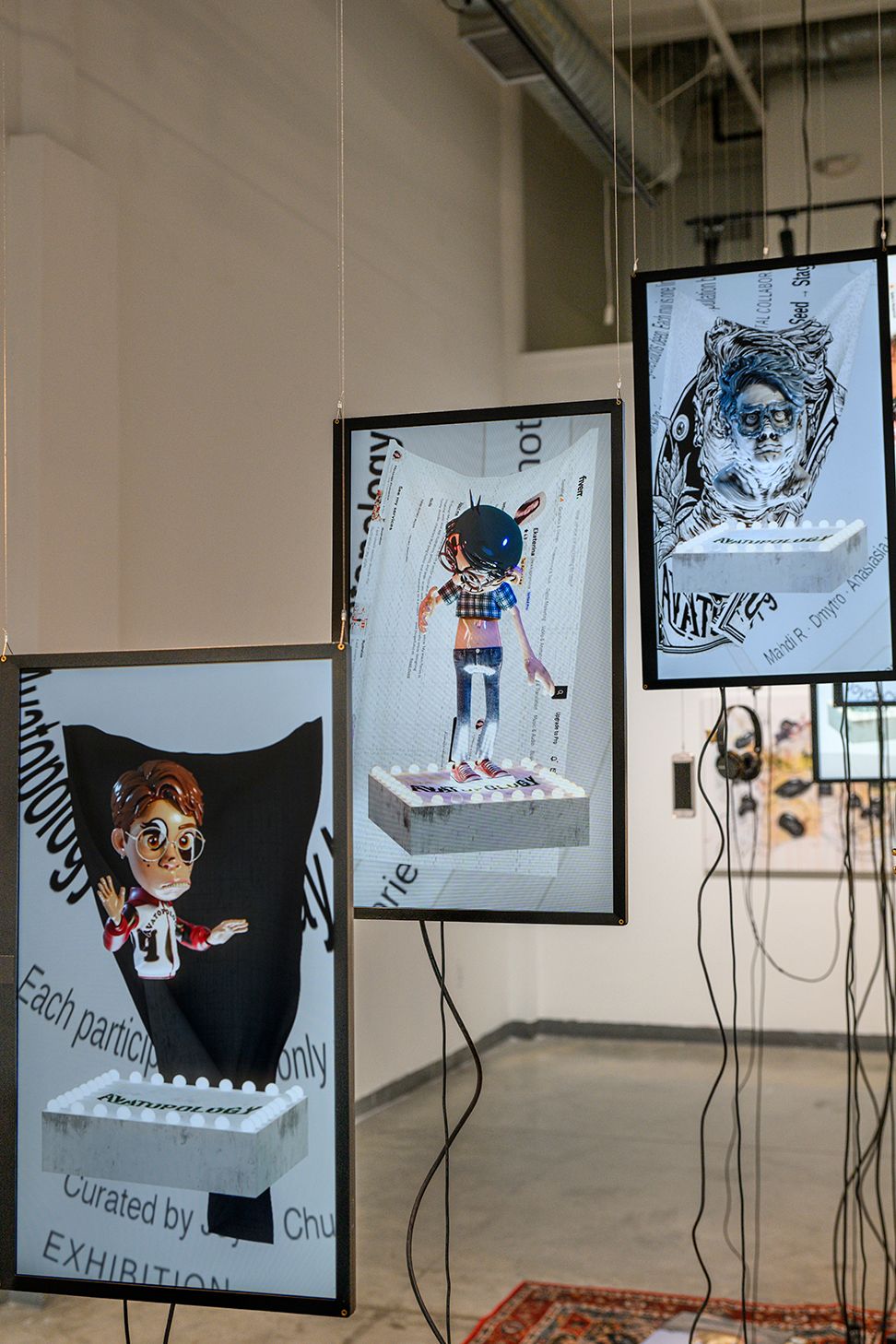
Frank: So visually, they are seeing this multimedia installation and a sound component. There's a record player playing a collection of vinyls, suggested by my collaborators. And there's a little library set aside on a bench also suggested by my collaborators. And there are nine screens showing the nine animations as evidence of the collaboration... the characters that we worked on together. Aside from the animations are objects, you see a guitar, a drum, a digital piano, you see lamps, a medieval helmet. All these objects are from my conversations with the collaborators.
Dave: Why were you so interested in their personal lives?
Frank: I'll ask them to share an object in your real life with me to get to know somebody really quickly. Kind of an intimate way, to just ask them what you like. So they sent me a bunch of objects, which I purchased and they naturally just became a part of the installation.
Dave: So the nine screens are what you commissioned from each of the collaborators on Fiverr. Then the other eye objects around it are the evidence of your relationship with them?
Frank: Them: Exactly. Objects that are generated naturally in this network.
Dave: Can you tell me how this exhibition came about?
Frank: So this exhibition was designed around AAI’s exhibition space. I was invited by Joyce Chung, the Curator at AAI. When she first approached me, she asked me what I would like to show there, so we made that decision to show this particular project based on the nature of the Asian Arts Initiative. It's a very community oriented institution and it does a great job engaging the community and the local artists and viewers. So I proposed to Joyce to show this 2.0 version of this body of work titled Avatopology.
Dave: Can you talk a little bit more about the changes you made between Avatopology 1.0 at NARS Foundation in 2024 and 2.0 at Asian Arts in 2026?
Frank: So I think the most obvious change is the game rule. In 1,0, we had a flat collaboration. The rules mostly apply to myself, and I have two main rules. First, I'm gonna pay all the collaborators. I'm not gonna let them work for free, so I commission them. Right? And I do pay them more than what they ask for. That's the first rule. The second rule is when they deliver their digital assets, I will never reject their delivery. I only find a way to work with these digital assets.
Dave: So that’s 1.0? Or 2.0?
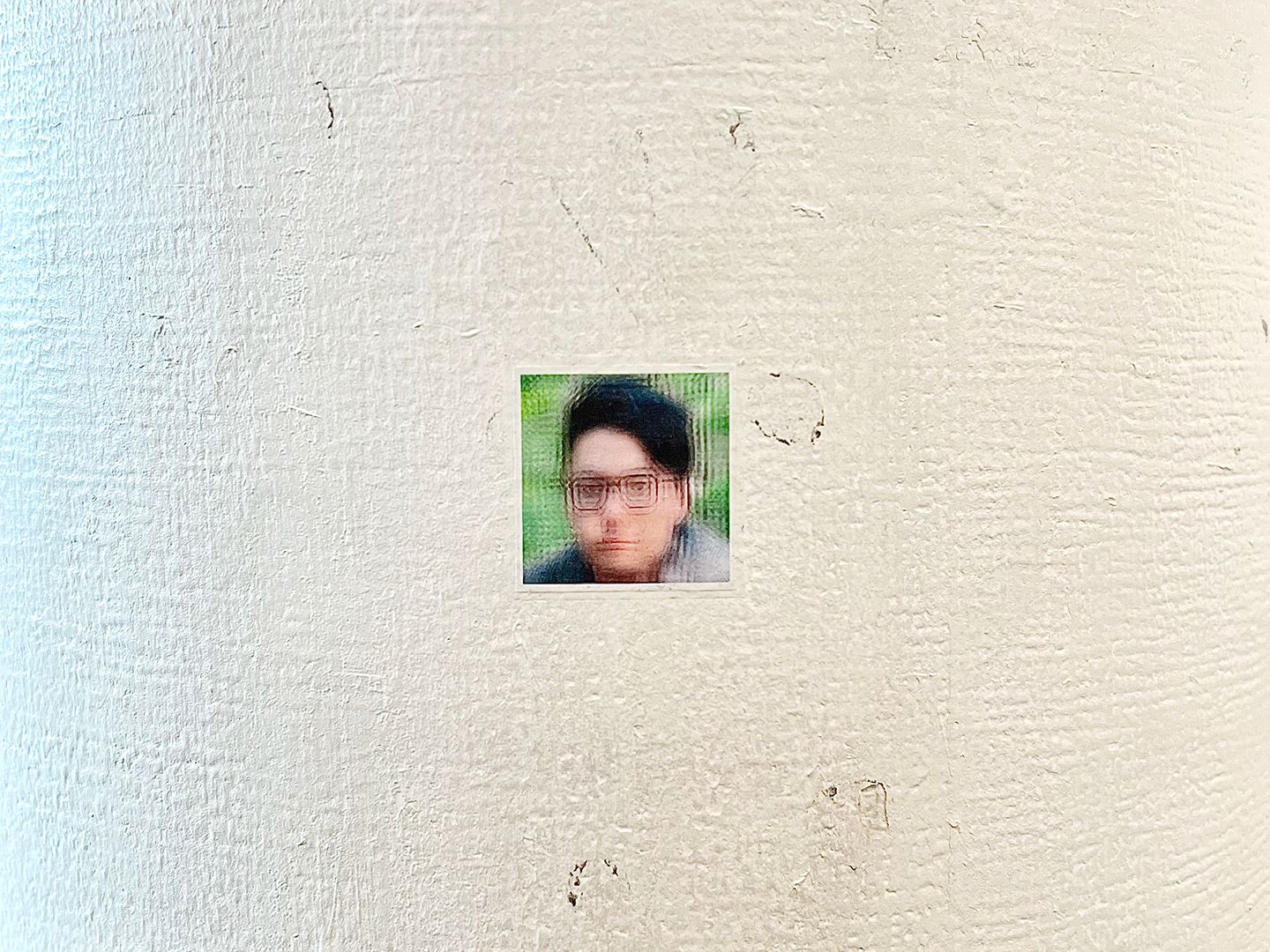
Frank: That’s 1.0, and I kept the collaborative premise. But In 2.0, I designed a new way to get this going. 2.0 is more like an exquisite corpse instead of a flat collaboration. To multiply the unpredictability, I sent a blurry photo of myself and asked the first group of collaborators to convert it into a 2D drawing or 2D illustration, in whatever style they'd like to work. And when the first stage is done, I pass these results onto the second stage of collaborators to turn them into 3D models. So only the first group of collaborators would see the original blurry photo. Everyone after them is only seeing the result from one step before them, meaning the author is truly dissolved. We've reached 6 stages in total before the show. In a way, it’s really like a relay, and this relay can result in branches. Some of the characters became really sculptural, which is extremely interesting. It all became these variations that I couldn’t have imagined just by myself.
Dave: You quote Roland Barthes and his ideas around the death of the author, but I guess I’m curious why does the author have to die? Why is that important in this project?
Frank: It’s to try to create an alternative way of working and collaborating inside an existing system, Fiverr in this case, that’s often very problematic and exploitative. The collaboration is an experiment in the possibility of building a truly autonomous network, one that doesn’t depend on a single author, and where people have fun creating and connecting. Another reason I make this work in a time like this is the other elephant in the room, which is the ubiquitous discussion of artificial intelligence (AI). The funny contrast is, compared to AI, this project is really labor-intensive while embracing unpredictability, and to make that happen, it relies on real people working through that same problematic platform.
Dave: For the record, I want to note that you brought up AI, not me.
Frank: [Laughs] Sure.
Dave: Because it is tough to talk about an artist working with technology without talking about artificial intelligence right now. But I resist it whenever I talk about this work. There’s a version of this work where you work with AI models, and don't work with people at all. But you have set up this system where you are putting in a LOT more time and effort to work with people. So even though the show itself uses technology, it feels more like a show about our relationship with each other through technology. Would you agree with that interpretation?
Frank: Yes, it’s really about people and real connection. This particular project is one where I’m having a lot of fun, but at the same time, not having fun with the administrative logistics. And I’m naturally not that good at that kind of work. I enjoy all these chats with the collaborators, and I have a huge archive of our conversations. But in daily life, I don’t even text my friends that much, and I can be slow to reply to emails. During the collaboration, I was constantly talking with my collaborators, while keeping track of deliveries and making sure everyone got paid on time. It was challenging for me at times, but the fulfillment comes from the moment when it all finally comes together through all that communication.
Dave: Tell me about it.
Frank: The amount of administrative work was quite difficult. But then, some really memorable moments came from the chats and the feedback from my collaborators. Before the exhibition opening, I was sending all 33 collaborators an update, because I kept the whole process as transparent as possible for them. One collaborator saw the installation shot, where we had a lot of suspended objects, as you know, and the person replied, oh my god, that’s crazy, did you hang all this by yourself? And another collaborator said, that’s amazing, I wanna do something like that in the future too. Right? So those responses were really meaningful to me. From the very beginning, I used my blurry photo as a seed. But maybe during the process, I planted a different kind of seed.
Dave: Is there any interaction you had with a collaborator that made you question your project? Did anyone break the rules that you had set up?
Frank: I think paradox is still a very big part of this project. You know, some of the questions from 1.0 remain. I can’t say we’ve totally solved everything. One of the paradoxes is that, as a trained artist, from my BFA to my MFA, I’m used to the lexicon of the contemporary art field. But my collaborators aren’t necessarily contemporary artists. They have their own particular language. Maybe they’re more used to working in motion graphics, motion design, graphic design, or industrial design, in the commercial field. How do you reconcile that.
Dave: That's the kind of person you typically hire on Fiverr. Is that correct?
Frank: Right. So that’s one of the biggest challenges. How do I find a way to reconcile those different visual languages in one artwork? But also, how do I totally disrupt the existing system? And then there’s my position as the author, as the main artist, which becomes an obscure concept at the end of the day: am I being completely removed or dissolved? Maybe I’m not the one to say. These questions, these struggles, these paradoxes themselves are very interesting as part of the work. I just tried to give the collaborators as much freedom as possible. If anything, where some of them failed at the beginning was by being too responsible as service providers. They tried really hard to fulfill my needs as a client. So I had to push and make them understand that it’s not about what I need. It’s about being free to create in their own language and style. But of course, they’re used to working with clients, right? So they would ask me questions about “right or wrong” ways of doing things. I tried my best to convince them that there’s no right or wrong here. Just do whatever you want.
Dave: Ok, now I understand better. One of my questions for you in the project was, what if you rejected work? Problematized the person-to-person interaction? But that's actually leaning too far into the infrastructure that Fiverr has already set up where people go to hire freelancers for gigs. Those collaborators’ work is being rejected all the time. So the radical approach for you as artist is actually not to reject anything.
Dave: Tell me about the Avatapology book. What's gonna be in the book?
Frank: Absolutely. The book is conceived as an anthology rather than a catalog. Alongside the material the relay produced with the 33 Fiverr creators who participated in the process, it will hold five new texts, each approaching the work from its writer’s own angle. In making the book, the mindset is also to give as much power to the designer as possible, because I want the designer to treat this as a creative work too, not just a show catalog. The last thing we want is just another catalog of an installation. You know, what’s the point of that? A book, to me, is a very intimate object when you hold it in your hand. It’s also an archive that records the process of making a project. And at the same time, a book as an archival object raises the question Yuk Hui asks: what are you archiving, and for what are you archiving?
Dave: It seems like the book is a continuation of the rules of the project. What you're archiving is the paradoxes of the project. You're you're making a book, but you're not solely in control of it. Right?
Frank: Yes.
Dave: Do you have an expected release date?
Frank: Next spring.
~
Avatapology 2.0 by Frank WANG Yefeng is on view at Asian Arts Initiative until December 5th, 2026. Gallery Hours are Thu/Fri/Sat 2-6PM. Dave Kyu is the Director of Programs at Asian Arts Initiative. Exhibition installation photos are taken by Constance Mensh.